Case study
Oblivion
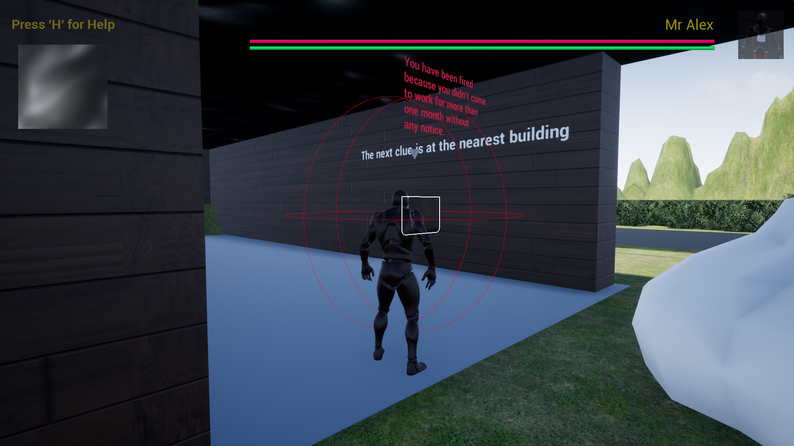
A simple adventure game made with Unreal Engine 4. An exploration-based experience showcasing 3D game development and level design capabilities.
2018 • 1 min read • Game Developer •
Live site
Project owner
U Universiti Teknikal Malaysia Melaka
Stack · Unreal Engine 4 · Blueprints · C++
Problem
The project needed to demonstrate strong 3D adventure fundamentals within a constrained scope, which required balancing immersion, performance, and production time. Without careful structure, prototypes can feel visually complete but mechanically shallow.
Solution
I implemented exploration-driven gameplay loops, intentional level progression, and core interaction mechanics in Unreal Engine to keep the experience complete and playable. The build focused on practical game flow, environment readability, and stable implementation rather than feature bloat.
Results
- - Produced a functional 3D adventure prototype with clear player flow.
- - Demonstrated environment building and gameplay system integration.
- - Established reusable Unreal workflows for later game projects.
What shipped
- - Exploration first gameplay in a 3D environment.
- - Scene and level composition for guided progression.
- - Blueprint + C++ implementation for mechanics and interactions.
- - Adventure pacing tuned for consistent player movement.
Overview
Oblivion is an exploration-based 3D adventure project built in Unreal Engine 4. The focus was delivering a complete prototype with playable progression and immersive level design.
Features
- Exploration-first gameplay in a 3D environment.
- Scene and level composition for guided progression.
- Blueprint + C++ implementation for mechanics and interactions.
- Adventure pacing tuned for consistent player movement.
Future Improvements
- Add richer objectives and mission checkpoints.
- Improve environmental feedback and interaction cues.
- Expand performance tuning for lower-end devices.
Need something similar?
I build production web systems end-to-end: product, architecture, and shipping.